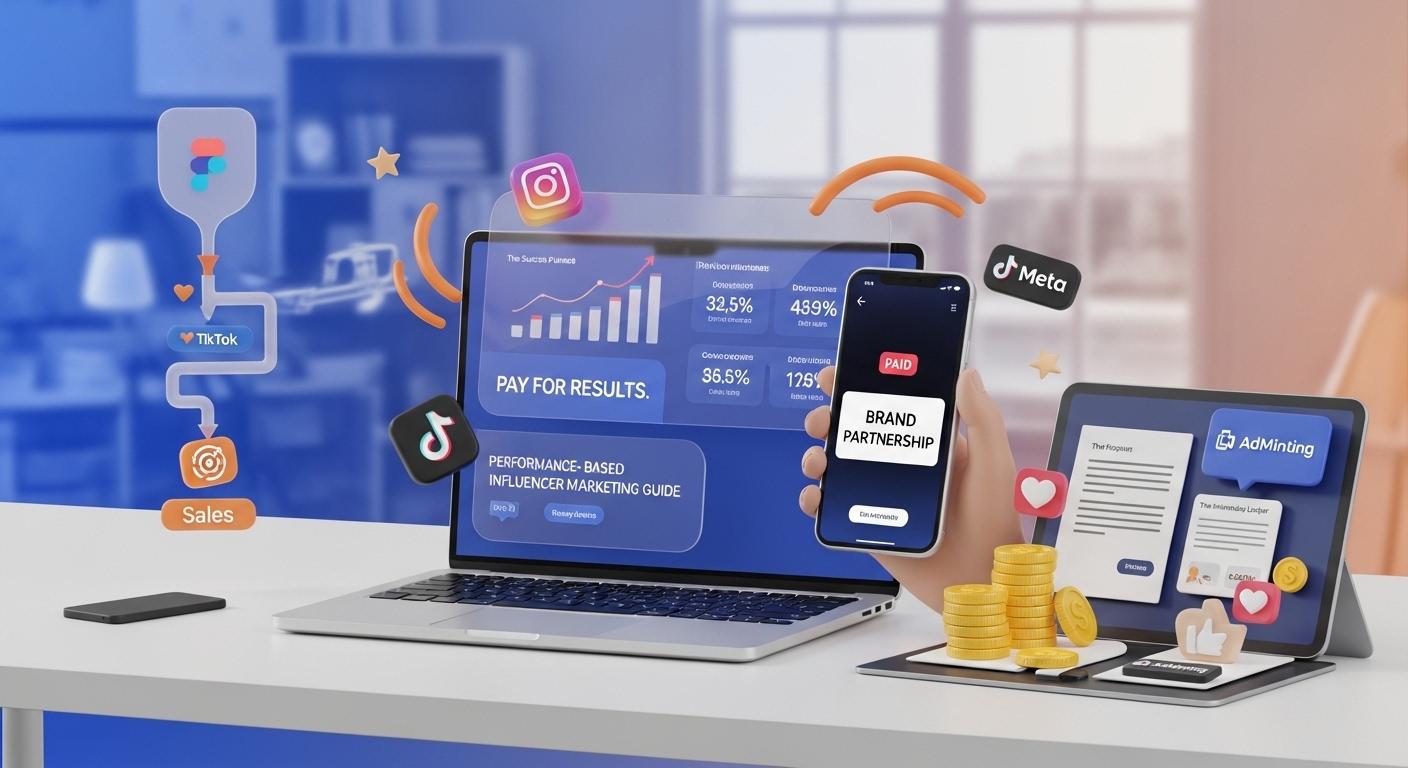
Performance-Based Influencer Marketing Explained

Chukwunyere Ebube
March 26, 2026
Performance-Based Influencer Marketing Explained: How It Works & Why It’s the Future of Brand Partnerships
For years, influencer marketing was driven by visibility. Brands paid creators for exposure, hoping that impressions, likes, and shares would eventually translate into sales. But as digital marketing matured, companies began asking tougher questions: How many customers did this campaign actually generate? What was the real return on investment?
That shift in mindset has led to the rise of performance-based influencer marketing, a model where creators are rewarded based on measurable outcomes like clicks, signups, installs, or purchases. In 2026, this approach is rapidly becoming the standard, not the exception, as brands look for accountable, data-driven marketing channels.
With influencer marketing spend surpassing $32 billion globally and continuing to grow alongside a creator economy valued at over $200 billion, performance-driven partnerships are shaping the future of brand-creator relationships.
This article explains how performance-based influencer marketing works, why brands are shifting toward it, and how businesses in Nigeria, Africa, and globally can leverage it for sustainable growth.
A Story from the Real World: Paying for Influence vs Paying for Results
A Nigerian e-commerce brand once ran a campaign with several popular lifestyle influencers to promote a new fashion collection. The posts generated thousands of likes and comments, and the brand initially celebrated what appeared to be strong engagement.
However, when the marketing team reviewed sales data, they realized something troubling, —only a handful of purchases could be directly linked to the campaign.
In their next campaign, they switched to performance-based partnerships, using affiliate links and paying creators a commission on each sale. The results were dramatically different: fewer influencers were used, but sales increased significantly because creators had a financial incentive to produce content that converted.
That shift from paying for attention to paying for results is exactly why performance-based influencer marketing is gaining traction.
By the end of this article, you’ll understand:
- What performance-based influencer marketing actually means
- How the payment and tracking systems work
- The benefits for brands and creators
- Why this model is shaping the future of digital advertising
So, What Makes Performance-Based Influencer Marketing Different from Traditional Influencer Marketing?
To understand its impact, we first need to look at how influencer marketing traditionally worked.
What Is Performance-Based Influencer Marketing?
Performance-based influencer marketing is a collaboration model in which creators are compensated for specific, measurable actions taken by their audience.
These actions may include:
- Clicking a link
- Signing up for a service
- Installing an app
- Making a purchase
Instead of paying a fixed fee for a post, brands pay only when these outcomes occur. This approach blends influencer marketing with affiliate marketing and performance advertising, creating a hybrid model that emphasizes accountability.
How Performance-Based Influencer Marketing Works
Step 1: Setting Clear Campaign Goals
The first step is defining what success looks like. For example:
- E-commerce brands track sales
- SaaS companies track free trial signups
- Fintech apps track account registrations
Clear goals allow brands to structure compensation and tracking systems effectively.
Step 2: Assigning Unique Tracking Mechanisms
Brands provide influencers with:
- Unique referral links
- Custom promo codes
- Dedicated landing pages
These tools allow every click or purchase to be attributed to a specific creator, ensuring accurate reporting.
Step 3: Paying Influencers Based on Results
Compensation models include:
- Cost per acquisition (CPA)
- Cost per lead (CPL)
- Revenue share or commissions
This structure aligns creator incentives with brand objectives, ensuring both parties benefit from strong campaign performance.
Why Brands Are Moving Toward Performance-Based Influencer Marketing
1. Marketing Budgets Are Under Increasing Scrutiny
In uncertain economic climates, marketing teams must justify every dollar spent. Performance-based influencer marketing provides clear ROI data, making it easier for brands to defend budgets.
Industry research shows that brands using proper attribution tools achieve an average return of $5.78 for every $1 spent on influencer marketing.
2. The Creator Economy Has Become Too Large to Manage Informally
With over 200 million creators worldwide, brands need scalable, standardized systems to manage partnerships efficiently.
Performance-based models provide structured contracts, predictable costs, and measurable outcomes, making large-scale influencer programs manageable.
3. Brands Want to Reduce Risk
Traditional influencer marketing involves paying upfront without guarantees of performance. Performance-based models reduce risk by tying payouts to results.
This is especially important for startups and SMEs in emerging markets, where marketing budgets are often limited.
Key Benefits of Performance-Based Influencer Marketing
Measurable ROI
Every campaign can be evaluated based on:
- Customer acquisition cost
- Conversion rate
- Revenue generated
This transforms influencer marketing from a branding activity into a revenue-generating channel.
Stronger Creator Accountability
Because influencers are paid based on performance, they are more likely to:
- Produce authentic content
- Promote products repeatedly
- Engage actively with their audience
This leads to higher trust and stronger campaign outcomes.
Scalable Growth for Brands
Performance-based campaigns can be scaled by:
- Increasing commissions for top performers
- Expanding to more creators
- Replicating successful campaign formats
This creates a repeatable growth engine rather than one-off promotional bursts.
Why Creators Are Also Embracing Performance-Based Partnerships
Although some influencers prefer fixed payments, many creators are embracing performance-based models because they provide long-term earning potential.
In markets like Nigeria, where creator income can be inconsistent, performance partnerships offer recurring revenue streams tied directly to content effectiveness. Recent reporting shows that many creators still earn less than $100 per month, highlighting the need for more sustainable monetization models.
Performance-Based vs Traditional Influencer Marketing
| Feature | Traditional Model | Performance-Based Model |
|---|---|---|
| Payment | Fixed upfront fee | Paid per result |
| Risk | High for brands | Shared between brand and creator |
| Measurement | Often unclear | Highly trackable |
| Long-term value | Limited | High, due to data and optimization |
How Brands in Nigeria and Africa Are Leveraging This Model
Africa’s creator economy is expected to grow significantly in the coming years, driven by increasing internet penetration, smartphone adoption, and a young digital-native population.
For brands operating in these markets, performance-based influencer marketing offers a way to:
- Reach local communities authentically
- Control marketing costs
- Measure results in environments where traditional advertising metrics can be unreliable
This is particularly relevant for fintech, ecommerce, and mobile-first startups across the region.
Common Mistakes Brands Make When Implementing Performance-Based Influencer Marketing
Overlooking Proper Tracking Infrastructure
Without reliable attribution systems, performance-based campaigns become difficult to manage and can lead to disputes between brands and creators.
Choosing Influencers Based on Popularity Instead of Relevance
Micro-influencers often deliver stronger conversion rates because their audiences are more engaged and trusting.
Offering Commission Structures That Are Too Low
If the incentive is not attractive, creators will prioritize other partnerships. Competitive commissions are essential for sustained creator engagement.
Is Performance-Based Influencer Marketing Suitable for Every Business?
Not every business model fits performance-based influencer marketing equally well. Companies with clear digital conversion points such as ecommerce stores, mobile apps, or online services benefit the most because user actions can be tracked easily.
However, even brands in sectors like education, real estate, and B2B services are finding creative ways to track performance through lead generation and content engagement metrics.
Conclusion
Performance-based influencer marketing represents a major evolution in how brands collaborate with creators. Instead of relying on visibility and assumptions, companies now expect measurable business outcomes from influencer partnerships.
As the creator economy continues to expand and marketing budgets become more data-driven, performance-based models are likely to dominate future brand-creator collaborations. They offer transparency, accountability, and scalability — three qualities modern marketing teams cannot afford to ignore.
If your brand wants to move beyond vanity metrics and build influencer campaigns that generate real business results, visit Adminting.com to connect with niche community promoters and run fully trackable, performance-driven campaigns.
FAQ Section
Q: What is performance-based influencer marketing?
A: It is a model where influencers are paid based on measurable outcomes such as sales, leads, or installs rather than a fixed fee for posting content.
Q: Is performance-based influencer marketing cheaper than traditional influencer marketing?
A: It can be more cost-efficient because brands only pay when results are achieved, reducing wasted spend.
Q: Do influencers prefer performance-based deals?
A: Many micro- and niche influencers do because it offers long-term earning potential, though top-tier creators may still prefer hybrid or fixed-fee models.
Q: How do brands track influencer performance?
A: Through unique referral links, promo codes, conversion pixels, and analytics dashboards.
Q: What industries benefit most from this model?
A: E-commerce, fintech, SaaS, and mobile apps benefit most because their customer actions can be tracked easily.
References
- Creator Economy Market Size & Growth Data (2025–2026) – Youflu
- Creator Economy Statistics 2026 – Companies History
- Pulse Advertising Influencer ROI Report 2026
- Gitnux Influencer Marketing Statistics 2026
- Digitas Africa Creator Economy Outlook 2025
- The Guardian Nigeria – Creator Economy Growth Report 2026
Recommendation
If you’re exploring ways to improve ROI from influencer campaigns, the next step is to implement structured tracking and commission-based partnerships. Adminting provides tools that help brands discover niche creators, manage campaigns, and monitor performance metrics in real time.
You may also benefit from reading:
- How to measure influencer marketing ROI effectively
- Best creator payment models for African markets
- Influencer campaign management strategies for startups